“`html
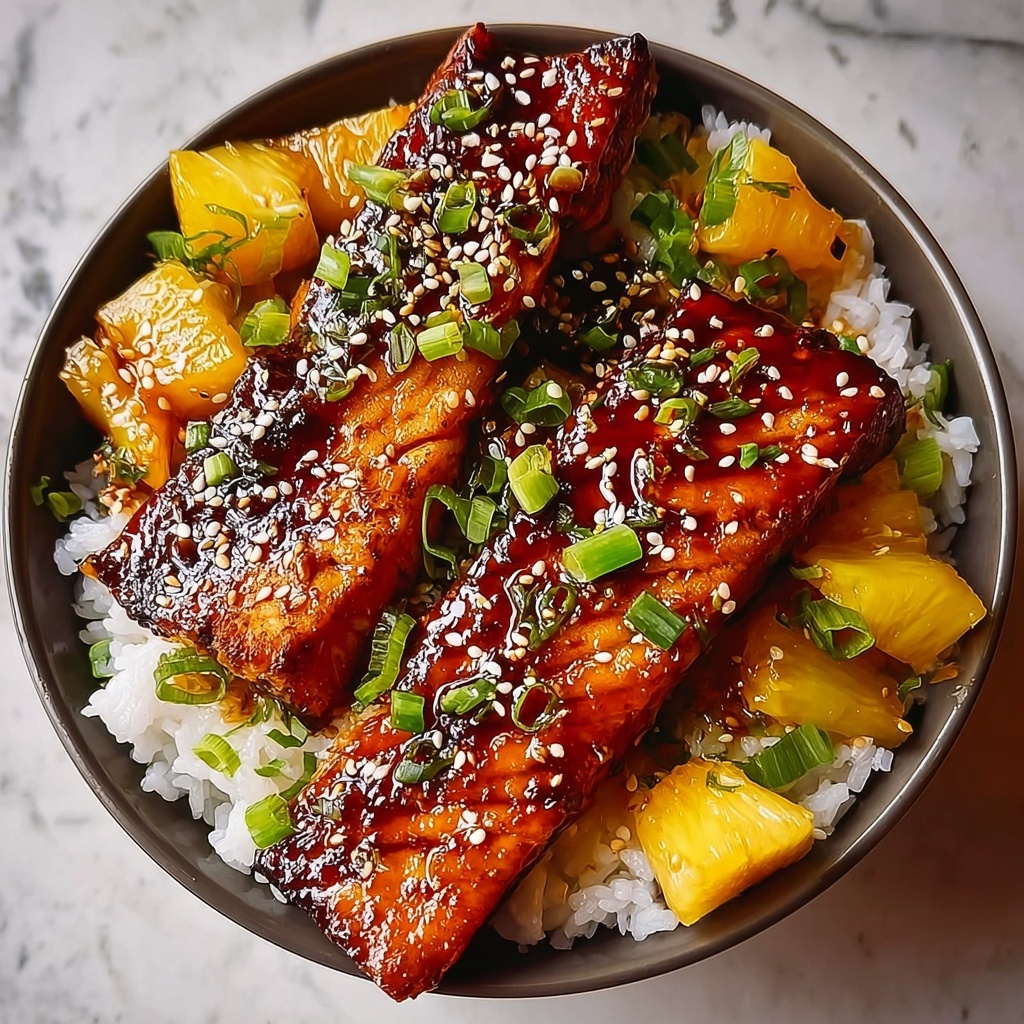
If you’re craving a dish that bursts with vibrant tropical flavors while delivering tender, flaky salmon, look no further than this Pineapple Glazed Salmon Recipe. The luscious sweetness of fresh pineapple paired with savory soy and a zing of fresh ginger creates an irresistible glaze that beautifully complements the rich salmon fillets. It’s a bright, flavorful, and deceptively simple recipe that feels special enough for any occasion but is quick enough to make any weeknight dinner a celebration.
Ingredients You’ll Need
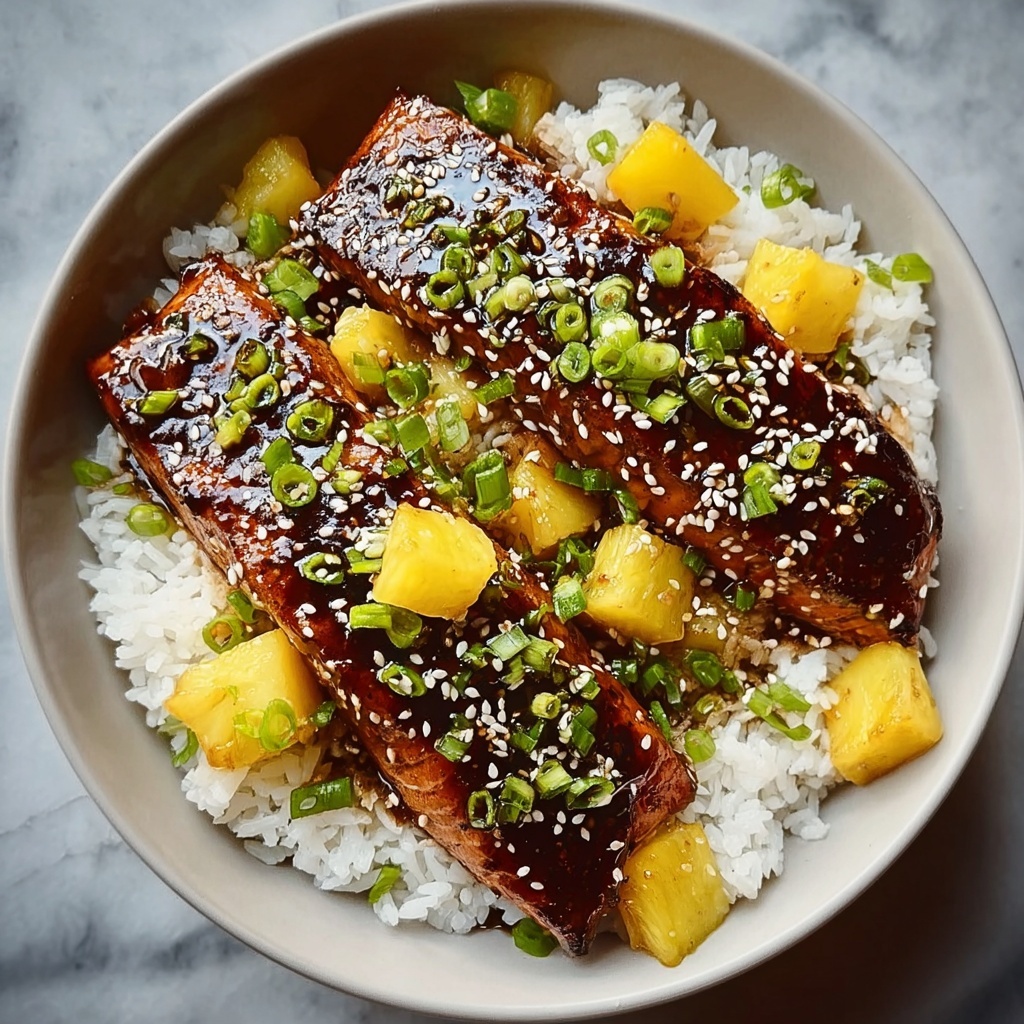
These ingredients are wonderfully straightforward yet thoughtfully chosen to balance sweetness, acidity, and umami. Each one plays a crucial role in layering the flavor and giving the dish its signature color and texture.
- Salmon fillets (4, about 6 ounces each): Choose fresh fillets with skin on for moistness and to get that crispy texture when cooked.
- Fresh pineapple chunks (1 cup): This is the star ingredient for your glaze, lending a natural sweetness and tang.
- Soy sauce (1/4 cup): Adds a savory depth and subtle saltiness that elevates the glaze.
- Honey (1/4 cup): Enhances the sweetness and helps create a beautiful caramelized finish.
- Rice vinegar (2 tablespoons): Introduces a bright acidity that balances the sweetness perfectly.
- Garlic, minced (2 cloves): Offers aromatic warmth and a subtle bite.
- Fresh ginger, grated (1 teaspoon): Gives the glaze a gentle spicy zing and complexity.
- Cornstarch (1 tablespoon): Used to thicken the glaze into a luscious sauce that clings to the salmon.
- Water (2 tablespoons): Helps dissolve the cornstarch for a smooth texture.
- Salt and pepper, to taste: Essential seasonings that enhance and balance all the flavors.
- Green onions, sliced (2): Used as a fresh, crunchy garnish that adds a pop of color.
- Sesame seeds: Toasted for a nutty crunch and a beautiful finishing touch.
How to Make Pineapple Glazed Salmon Recipe
Step 1: Blend the Glaze Ingredients
Start by combining the fresh pineapple chunks, soy sauce, honey, rice vinegar, minced garlic, and grated ginger in a blender or food processor. Blitz until smooth to create your vibrant pineapple glaze, which will infuse the salmon with incredible tropical sweetness and a savory kick.
Step 2: Simmer the Glaze
Pour the blended mixture into a saucepan and bring it to a gentle simmer over medium heat. This step helps meld the flavors together and warms the glaze so it can easily thicken in the next step.
Step 3: Thicken the Sauce
Mix cornstarch and water in a small bowl until smooth, then slowly stir this into your simmering glaze. Continue cooking for 2 to 3 minutes until the glaze thickens into a silky sauce perfect for coating the salmon beautifully.
Step 4: Season the Salmon
While the glaze is finishing, season your salmon fillets generously with salt and pepper on both sides. This simple step enhances the fish’s natural flavor and creates a savory foundation for the glaze.
Step 5: Heat the Skillet
Heat a large skillet over medium-high heat, adding just enough oil to coat the bottom. A well-heated pan is key to getting that crispy skin on the salmon without sticking.
Step 6: Cook the Salmon Skin-Side Down
Place the salmon fillets skin-side down in the hot skillet and cook for 4 to 5 minutes. This gives you a beautifully crisp skin while gently cooking the fish from below, locking in moisture.
Step 7: Glaze and Finish Cooking
Flip the salmon carefully, then brush half of your thickened pineapple glaze over the tops. Let it cook another 4 to 5 minutes until the salmon flakes easily with a fork and the glaze caramelizes slightly, adding a wonderful sticky sweetness.
Step 8: Serve with Final Glaze Touch
Remove the salmon from the skillet and drizzle the remaining glaze over the top. This extra layer adds both shine and maximal flavor that makes every bite luscious and memorable.
Step 9: Garnish and Enjoy
Sprinkle sliced green onions and toasted sesame seeds over your plated salmon. The fresh crunch of the scallions and nuttiness of sesame seeds create the perfect finishing contrast to the soft, flavorful fish.
How to Serve Pineapple Glazed Salmon Recipe
Garnishes
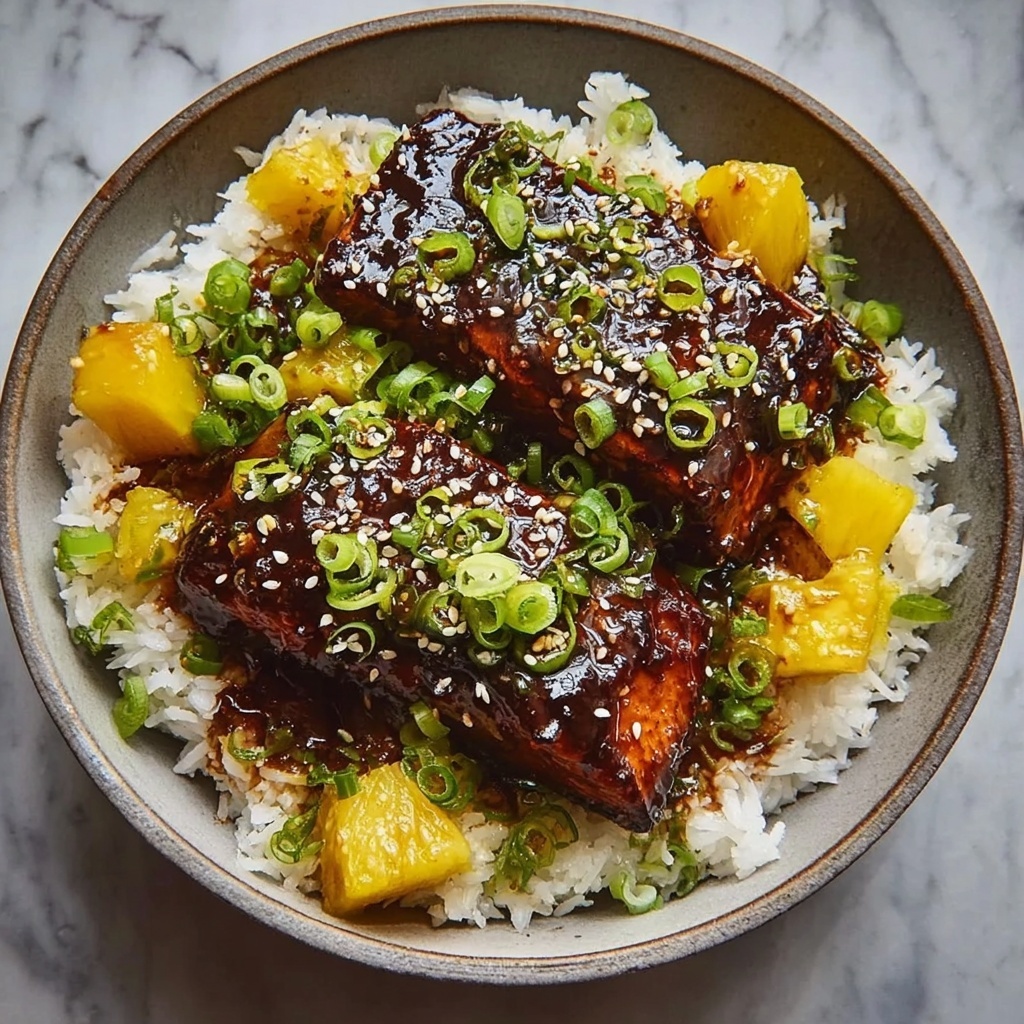
Bright green onions and toasted sesame seeds aren’t just pretty—they add a burst of freshness and a light crunch that elevates the entire dish. Consider adding thinly sliced red chili for a subtle heat or a few lime wedges to squeeze over for extra zing.
Side Dishes
This Pineapple Glazed Salmon Recipe pairs wonderfully with simple steamed jasmine rice or coconut rice, which soak up that luscious glaze perfectly. For a veggie boost, try sautéed snap peas, roasted asparagus, or a crisp cucumber salad with a light vinaigrette to balance the richness.
Creative Ways to Present
Serve this salmon atop a bed of fresh mixed greens dressed lightly with sesame oil and a splash of rice vinegar for a light and elegant salad. Alternatively, plate it with a vibrant quinoa salad studded with mango, red bell pepper, and fresh herbs to echo the tropical theme.
Make Ahead and Storage
Storing Leftovers
Once cooled, store any leftover pineapple glazed salmon in an airtight container in the refrigerator. It will keep well for up to 2 days, maintaining its flavors so you can enjoy a quick and delicious meal the next day.
Freezing
If you’d like to freeze leftovers, wrap the salmon tightly in plastic wrap and place it in a freezer-safe bag or container. It freezes well for up to one month, though the texture of the glaze may shift slightly when thawed.
Reheating
Reheat gently in a low oven or microwave in short bursts to avoid drying out the salmon. Adding a spoonful of extra pineapple glaze when reheating helps retain moisture and flavor, making leftovers taste almost as good as fresh.
FAQs
Can I use canned pineapple instead of fresh?
While fresh pineapple offers the best natural sweetness and texture, canned pineapple in juice can work in a pinch. Avoid versions packed in syrup, as they may make the glaze overly sweet. Fresh is always preferred for vibrant flavor.
Is this recipe suitable for grilling?
Absolutely! You can grill the salmon fillets skin-side down first, then brush the glaze on during the final minutes to caramelize. Grilling adds a smoky depth that complements the pineapple glaze beautifully.
What if I don’t have cornstarch to thicken the glaze?
You can substitute with arrowroot powder or flour mixed with water. Just keep an eye on the consistency as you simmer, adding a little at a time until your glaze reaches that perfect, sticky thickness.
Can I make the glaze ahead of time?
Yes! Prepare the glaze up to the simmering and thickening step, then cool and refrigerate it in a sealed container for up to two days. Reheat gently when ready to cook your salmon for ultimate convenience.
How do I know when the salmon is fully cooked?
The salmon should easily flake with a fork and have an opaque center. Cooking time will vary slightly based on thickness—usually 4 to 5 minutes per side is perfect for a 6-ounce fillet.
Final Thoughts
There is something truly special about the combination of tropical sweetness and savory salmon that makes this Pineapple Glazed Salmon Recipe a standout. It’s a fantastic way to impress family or guests without spending all day in the kitchen. When you try it, I promise it will quickly become one of your favorite go-to dishes, bursting with fresh flavor and simple elegance at every bite.
“`
Print
Pineapple Glazed Salmon Recipe
- Prep Time: 15 minutes
- Cook Time: 15 minutes
- Total Time: 30 minutes
- Yield: 4 servings
- Category: Main Course
- Method: Frying
- Cuisine: Fusion
Description
This Pineapple Glazed Salmon recipe features tender salmon fillets cooked to perfection with a sweet and tangy pineapple glaze. The fresh pineapple combined with soy sauce, honey, and ginger creates a flavorful sauce that perfectly complements the rich salmon. Garnished with green onions and sesame seeds, this dish is a vibrant and healthy meal that’s quick to prepare and sure to impress.
Ingredients
Salmon
- 4 salmon fillets (about 6 ounces each)
- Salt and pepper to taste
- Oil for cooking (about 1 tablespoon)
Pineapple Glaze
- 1 cup fresh pineapple chunks
- 1/4 cup soy sauce
- 1/4 cup honey
- 2 tablespoons rice vinegar
- 2 cloves garlic, minced
- 1 teaspoon grated fresh ginger
- 1 tablespoon cornstarch
- 2 tablespoons water
Garnish
- 2 green onions, sliced
- Sesame seeds
Instructions
- Make the Pineapple Glaze: In a blender or food processor, combine fresh pineapple chunks, soy sauce, honey, rice vinegar, minced garlic, and grated ginger. Blend until smooth to create a fresh, flavorful pineapple glaze.
- Simmer the Glaze: Pour the blended glaze into a saucepan and bring it to a simmer over medium heat. This helps meld the flavors together.
- Thicken the Glaze: In a small bowl, mix cornstarch and water until smooth. Gradually stir this mixture into the simmering glaze, cooking for 2-3 minutes until the glaze thickens. Remove from heat once thickened.
- Prepare the Salmon: Season the salmon fillets with salt and pepper on both sides to enhance their natural flavor.
- Heat the Skillet: Heat a large skillet over medium-high heat and add oil to coat the skillet’s bottom. This prevents sticking and promotes even cooking.
- Cook Salmon Skin-Side Down: Place the salmon fillets skin-side down in the skillet. Cook for 4-5 minutes until the skin is crispy and the salmon starts to cook through, then carefully flip the fillets.
- Glaze and Finish Cooking: Brush half of the pineapple glaze over the salmon and continue cooking for another 4-5 minutes, or until the salmon flakes easily with a fork, indicating it’s fully cooked.
- Serve with Remaining Glaze: Remove the salmon from the skillet and drizzle the remaining pineapple glaze on top for added flavor and moisture.
- Garnish and Present: Garnish the glazed salmon with sliced green onions and sesame seeds for a fresh, nutty finish before serving.
Notes
- Fresh pineapple is preferred for the best flavor, but canned pineapple chunks can be used in a pinch.
- Adjust honey quantity to increase or decrease the sweetness of the glaze according to your taste.
- For crispier salmon skin, ensure the skillet is well-heated before adding the fillets.
- Use a non-stick or well-seasoned skillet to prevent the salmon from sticking during cooking.
- This recipe pairs well with steamed rice or sautéed vegetables for a complete meal.