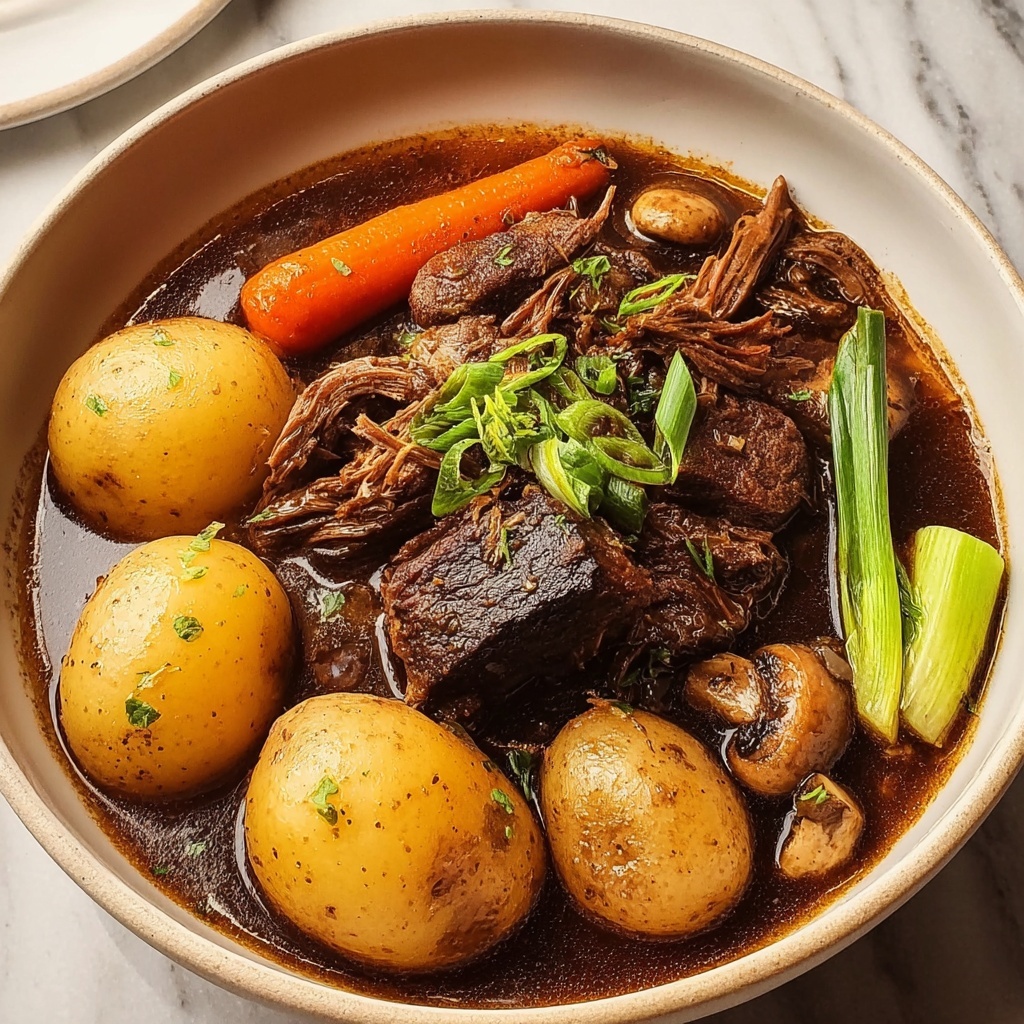
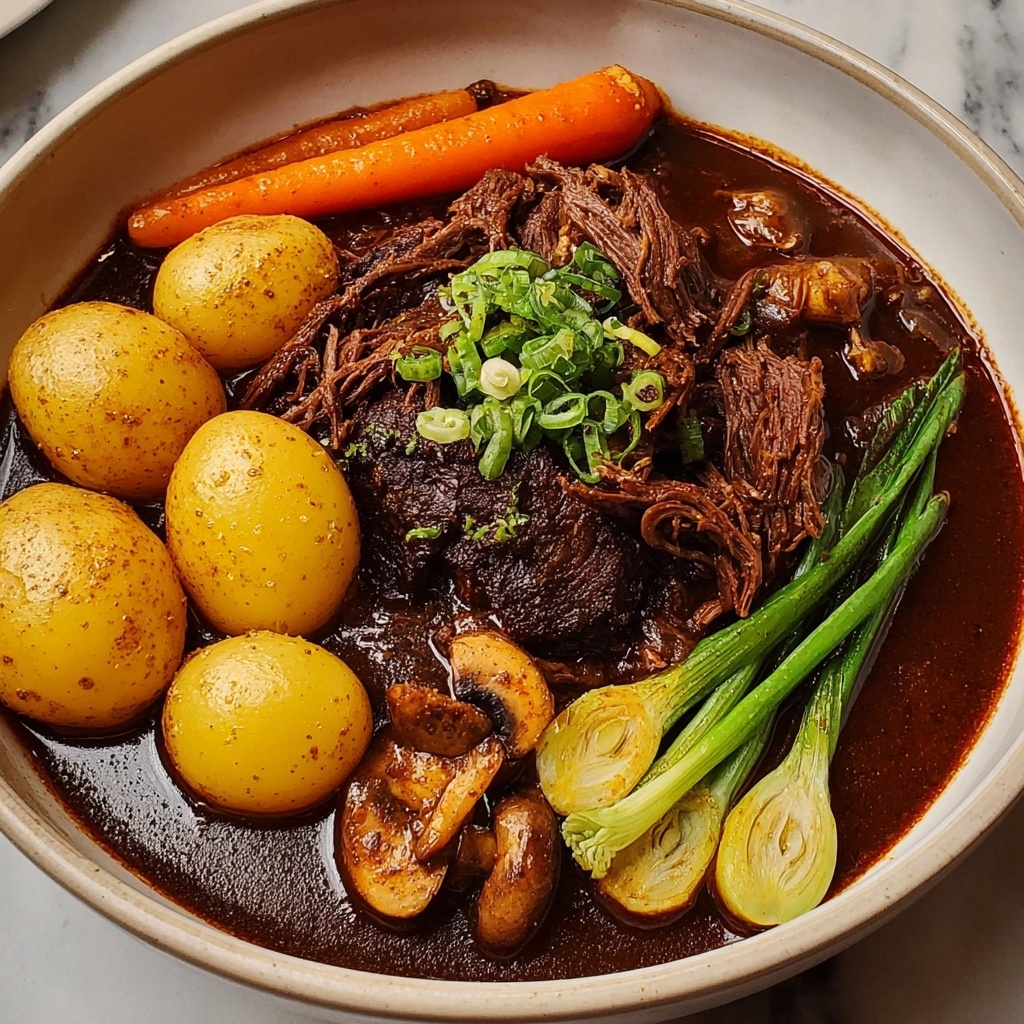
If you are craving a rich, comforting meal with a perfect blend of bold flavors and tender, melt-in-your-mouth meat, you are going to love this Korean Style Pot Roast Recipe. This dish beautifully marries traditional Korean ingredients like gochujang and Korean pear with the hearty goodness of a classic pot roast, delivering an irresistible umami-packed experience. The slow braise transforms the beef chuck roast into something truly special, while the aromatic vegetables soak up the luscious sauce for a symphony of tastes and textures in every bite.
Ingredients You’ll Need
All the ingredients here are straightforward, yet each one plays a crucial role in building the complexity and heartiness of the Korean Style Pot Roast Recipe. From the aromatic ginger to the lightly sweetened soy-based braising liquid, these essentials work together to create a beautifully balanced dish.
- Beef chuck roast (3 to 3.5 lb): The perfect cut for slow braising, it becomes tender and juicy while soaking up the flavorful sauce.
- Kosher salt (1 1/2 tsp): Essential for seasoning and bringing out the natural flavors of the beef.
- Freshly ground black pepper (3/4 tsp): Adds a subtle kick and depth to the roast.
- Vegetable oil (2 tbsp): Ideal for searing the meat without introducing competing flavors.
- Yellow onion (1 large, sliced): Provides sweetness and a tender bite after braising.
- Garlic (4 cloves, minced): Offers an aromatic base that’s classic in Korean cooking.
- Fresh ginger (2-inch piece, peeled and thinly sliced): Adds warmth and a subtle zing to the sauce.
- Green onions (3, cut into 2-inch pieces): Using both white and green parts boosts the freshness and garnish.
- Carrots (2 medium, cut into 1-inch chunks): They bring a natural sweetness and vibrant color to the dish.
- Potatoes (2 medium, peeled and cut into 1.5-inch chunks): These help make the meal extra hearty and comforting.
- Daikon radish (1 cup, peeled and cut into 1-inch chunks): Optional but traditional, it adds an earthy sweetness and texture contrast.
- Cremini or button mushrooms (8 oz, halved): They soak up the sauce wonderfully and add an umami boost.
- Low-sodium beef broth (2 cups): The savory foundation of the braising liquid.
- Low-sodium soy sauce (1/3 cup): Adds saltiness along with a touch of caramel-like depth.
- Gochujang (3 tbsp): Korean chili paste that brings subtle heat and a complex fermented flavor.
- Brown sugar or honey (2 tbsp): Balances the heat and saltiness with its gentle sweetness.
- Mirin or rice wine (2 tbsp): Adds a mild fruity sweetness and slight acidity for balance.
- Toasted sesame oil (1 tbsp): Imparts a nutty aroma that is signature in Korean dishes.
- Rice vinegar (1 tbsp, optional): Adds a bright note to finish the sauce.
- Korean pear or Asian pear (1, peeled and grated): Natural tenderizer and sweetener, making the meat ultra-tender.
- Toasted sesame seeds (1 tsp): For garnish that adds crunch and toasty flavor.
- Extra sliced green onions: Fresh garnish that complements the rich roast.
How to Make Korean Style Pot Roast Recipe
Step 1: Prep the Beef and Vegetables
Start by patting your beef chuck roast dry, which helps achieve that gorgeous sear later. Season it evenly with kosher salt and freshly ground black pepper and press it lightly to ensure it adheres well to the meat. Meanwhile, prepare your aromatics and vegetables by slicing onions, mincing garlic, slicing ginger and green onions, and cutting carrots, potatoes, daikon radish, and mushrooms as described. Having everything ready ensures this recipe flows smoothly.
Step 2: Make the Korean-Style Braising Sauce
Whisk together beef broth, soy sauce, gochujang, brown sugar or honey, mirin, toasted sesame oil, and the grated Korean pear or apple. This sauce is the star of the Korean Style Pot Roast Recipe—it balances savory, sweet, and spicy notes perfectly. Give it a taste and tweak the heat or sweetness to suit your preference before setting it aside.
Step 3: Sear the Beef
Heat vegetable oil in a large heavy-bottomed pot or Dutch oven. When shimmering, add the seasoned roast and sear each side for about 3 to 4 minutes until a deep brown crust forms, including the edges. This step locks in the juices and adds layers of flavor through the Maillard reaction. Once seared, transfer the roast to a plate and set it aside.
Step 4: Sauté Aromatics
Keep the pot as is to preserve those flavorful browned bits. Lower the heat to medium and add sliced onions with a pinch of salt. Sauté, scraping up bits stuck to the bottom, for 3 to 4 minutes until the onions soften and sweeten. Then introduce garlic, ginger, and the white parts of the green onions, cooking for another 1 to 2 minutes to build a fragrant base.
Step 5: Deglaze and Add Sauce
Give your prepared sauce a quick stir and pour it into the pot with the aromatics. Use a wooden spoon to scrape the bottom clean, releasing that concentrated flavor into the braising liquid. Bring this mixture just to a simmer to marry the flavors before moving on.
Step 6: Return Beef to the Pot
Nestle the seared roast back into the pot, ensuring the liquid comes approximately halfway up the sides. If needed, add a splash of beef broth or water. Cover tightly with a lid to trap moisture and aromas.
Step 7: Braise the Pot Roast (Stovetop or Oven)
For stovetop: Reduce heat to low for a gentle simmer, cover, and cook for about 2.5 to 3 hours, turning the roast occasionally for even cooking. For oven: Preheat to 325°F (160°C), bring the pot to simmer on stovetop, then transfer to the oven, covered, and braise for the same amount of time, turning halfway through. You’ll know it’s ready when the beef is incredibly tender and pulls apart easily.
Step 8: Add Vegetables
About 45 to 60 minutes before the roast finishes, add carrots, potatoes, daikon, and mushrooms to the pot. Submerge them as fully as possible to soak up that delicious braising liquid and cook until tender alongside the beef.
Step 9: Finish the Sauce and Beef
When the beef is fall-apart tender, carefully remove it to a platter and tent with foil. Transfer vegetables to a serving bowl, skim off excess fat from the liquid, and if desired, simmer the sauce uncovered for 5 to 10 minutes to reduce slightly. Taste and adjust by adding a bit of rice vinegar for brightness or extra soy sauce for saltiness. Shred or slice the beef against the grain, return it to the pot with sauce or spoon sauce over it on a platter.
Step 10: Serve With Style
Arrange the beef surrounded by the tender braised vegetables in bowls or on a large serving dish. Sprinkle with green onion slices and toasted sesame seeds for that final elegant touch. Serve hot with steamed white rice and your favorite Korean side dishes for a meal that truly impresses.
How to Serve Korean Style Pot Roast Recipe
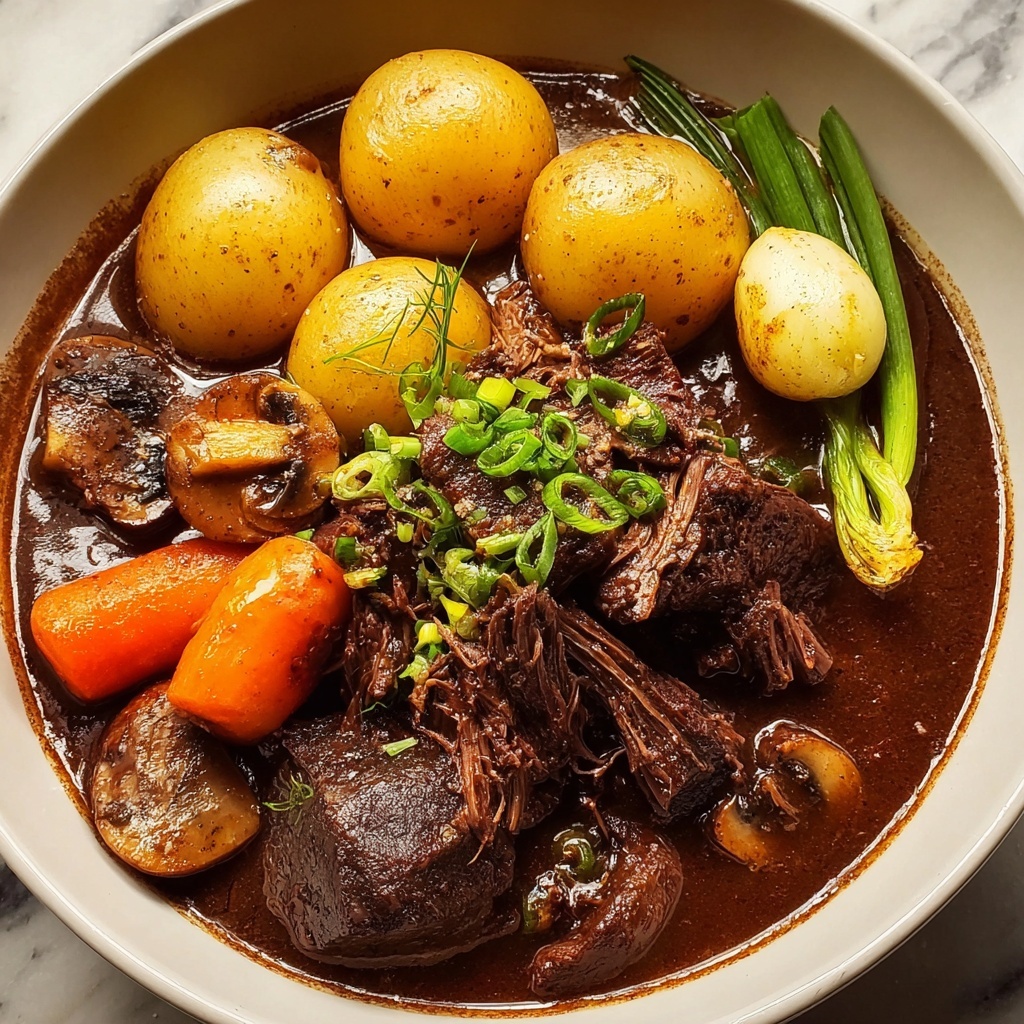
Garnishes
Fresh sliced green onions and toasted sesame seeds are perfect simple garnishes that add appealing color, crunch, and a nutty aroma. These finishing touches bring out the best in the flavors and appearance of the Korean Style Pot Roast Recipe, making it look as inviting as it tastes.
Side Dishes
This pot roast pairs wonderfully with fluffy steamed white rice to soak up the sauce, as well as classic Korean sides like kimchi for a spicy, tangy contrast and pickled vegetables for brightness and texture. You can also serve it alongside simple green veggies like sautéed spinach or steamed broccoli to balance the richness.
Creative Ways to Present
If you want to glam up your Korean Style Pot Roast Recipe for guests, try serving the beef shredded atop bowls of rice with veggies and drizzle the sauce over. For a comforting family-style meal, lay the roast on a large platter surrounded by the vegetables with sauce pooled beneath. Garnish generously and let everyone help themselves – it’s a feast that sparks conversation and joy.
Make Ahead and Storage
Storing Leftovers
Cool any leftover Korean Style Pot Roast Recipe entirely before transferring to airtight containers. Stored in the refrigerator, it stays fresh for up to 3 days. The flavors actually deepen overnight, making next-day leftovers an absolute dream to eat.
Freezing
This pot roast freezes beautifully. Portion the beef, vegetables, and sauce into freezer-safe containers or heavy-duty bags. Freeze for up to 3 months. Thaw in the refrigerator overnight before reheating for a convenient and satisfying meal anytime.
Reheating
To reheat, warm gently in a saucepan over low heat until just heated through, adding a splash of beef broth or water if needed to loosen the sauce. Alternatively, microwave in covered containers in short bursts with stirring for even warming without drying out the meat.
FAQs
Can I use a different cut of beef?
While beef chuck roast is ideal for its marbling and tenderness after long braising, you can use other tougher cuts like brisket or round roast, though cooking times might vary slightly to achieve the same melt-in-your-mouth texture.
Is gochujang spicy?
Yes, gochujang has a mild to moderate heat level with a rich, fermented flavor. You can adjust the amount used in this Korean Style Pot Roast Recipe depending on how much spice you prefer, or even substitute with a milder chili paste if desired.
What can I substitute for Korean pear?
If you can’t find Korean or Asian pear, a sweet apple works quite well as a natural meat tenderizer and adds the mild sweetness the recipe calls for. Just grate or finely chop and include it in the braising sauce as directed.
Can this recipe be made in a slow cooker?
Absolutely! After searing the beef and sautéing aromatics, transfer everything to the slow cooker with the sauce and vegetables. Cook on low for around 6 to 8 hours until tender. This method is incredibly hands-off and still delivers fantastic results.
How spicy will the Korean Style Pot Roast Recipe be for kids?
The heat level is quite moderate, especially if you reduce the gochujang or balance it with a bit more sugar or honey. The overall flavor is complex but not overwhelming, so it’s usually kid-friendly with mild adjustments.
Final Thoughts
Now that you know the secrets behind this irresistibly flavorful Korean Style Pot Roast Recipe, it’s time to gather your ingredients and try it for yourself. It’s truly a delicious way to enjoy Korean-inspired cuisine with family and friends, perfect for any occasion that calls for comfort food with a bold twist. Happy cooking and even happier eating!
Print
Korean Style Pot Roast Recipe
- Prep Time: 0h 30m
- Cook Time: 3h 0m
- Total Time: 3h 30m
- Yield: 6 servings
- Category: Main Dish
- Method: Braising
- Cuisine: Korean
Description
This Korean Style Pot Roast recipe offers a tender, flavorful beef chuck roast braised in a savory, slightly sweet, and spicy Korean-inspired sauce with gochujang, soy sauce, and grated Korean pear. Slow-cooked with aromatic vegetables and mushrooms, this hearty dish embodies deep umami flavors and melts in your mouth, perfect for a comforting, soulful meal served with steamed rice and traditional Korean sides.
Ingredients
Beef and Seasonings
- 3 to 3.5 lb (1.3–1.6 kg) beef chuck roast, trimmed of excess surface fat
- 1 1/2 tsp kosher salt
- 3/4 tsp freshly ground black pepper
- 2 tbsp vegetable oil or neutral cooking oil
Vegetables and Aromatics
- 1 large yellow onion, sliced
- 4 cloves garlic, minced
- 2-inch piece fresh ginger, peeled and thinly sliced (about 2 tbsp)
- 3 green onions, cut into 2-inch pieces (separate white and green parts)
- 2 medium carrots, cut into 1-inch chunks
- 2 medium potatoes, peeled and cut into 1.5-inch chunks
- 1 cup daikon radish, peeled and cut into 1-inch chunks (optional but traditional)
- 8 oz (225 g) cremini or button mushrooms, halved
Braising Sauce
- 2 cups low-sodium beef broth
- 1/3 cup low-sodium soy sauce
- 3 tbsp gochujang (Korean chili paste), adjust to taste
- 2 tbsp brown sugar or honey
- 2 tbsp mirin or rice wine
- 1 tbsp toasted sesame oil
- 1 tbsp rice vinegar (optional, for brightness at the end)
- 1 Korean pear or Asian pear, peeled and grated (or 1/2 sweet apple as substitute)
Garnishes
- 1 tsp toasted sesame seeds
- Extra sliced green onions
Instructions
- Prep the beef and vegetables: Pat the beef chuck roast dry with paper towels. Season all sides evenly with kosher salt and black pepper, pressing it into the meat. Slice the onion, mince the garlic, slice the ginger, cut the green onions (separating white and green parts), and chop the carrots, potatoes, daikon, and mushrooms as described and set aside.
- Make the Korean-style braising sauce: In a medium bowl, whisk together the beef broth, soy sauce, gochujang, brown sugar, mirin, toasted sesame oil, and grated Korean pear or apple. Taste and adjust seasoning with extra gochujang for heat or brown sugar for sweetness. Set aside.
- Sear the beef: Heat the vegetable oil in a large heavy-bottomed pot or Dutch oven over medium-high heat until shimmering. Add the seasoned roast carefully and sear for 3–4 minutes on each side until deeply browned, turning with tongs to brown all surfaces including edges. Remove and set aside on a plate.
- Sauté aromatics: In the same pot (keeping the browned bits), reduce heat to medium. Add the sliced onion and a pinch of salt. Sauté for 3–4 minutes, scraping up browned bits. Add garlic, ginger, and the white parts of the green onions and cook for 1–2 minutes until fragrant.
- Deglaze and add sauce: Stir the sauce mixture and pour it into the pot with the aromatics. Use a wooden spoon to scrape up any remaining browned bits, then bring the mixture to a gentle simmer.
- Return beef to the pot: Place the seared roast back into the pot, nestling it into the liquid so the liquid comes about halfway up its sides. Add more beef broth or water if necessary. Cover the pot with a tight-fitting lid.
- Braise the pot roast: For stovetop, reduce heat to low to maintain a gentle simmer and cook covered for 2.5 to 3 hours, turning the roast once or twice. For oven, preheat to 325°F (160°C), bring pot to simmer on stovetop, cover, transfer to oven, and braise for 2.5 to 3 hours, turning roast halfway.
- Add vegetables: About 45–60 minutes before the roast finishes, add carrots, potatoes, daikon, and mushrooms, submerging them as much as possible in the braising liquid. Continue braising until vegetables are tender and beef is fully soft and shreddable.
- Finish the sauce: When beef is very tender, remove roast to a cutting board and tent with foil. Transfer vegetables to a serving dish. Skim excess fat from braising liquid. Optionally reduce sauce by simmering uncovered for 5–10 minutes. Adjust seasoning with rice vinegar for brightness, more soy sauce for saltiness, or sugar as needed.
- Slice or shred the beef: Using two forks, shred beef into large chunks or slice against the grain into thick slices. Return beef to pot with reduced sauce and gently toss, or pour sauce over beef on a serving platter.
- Serve: Arrange beef on a platter with braised vegetables or serve all in deep bowls. Spoon additional sauce over top. Garnish with green parts of sliced green onions and toasted sesame seeds. Serve hot with steamed white rice, kimchi, and other Korean side dishes if desired.
Notes
- You can use a Dutch oven or any heavy-bottomed pot with a tight-fitting lid for best results.
- Adjust the gochujang quantity based on your preferred spice level.
- The Korean pear adds natural sweetness and helps tenderize the meat but can be substituted with a sweet apple.
- Adding daikon radish is optional but adds authenticity and a nice texture contrast.
- If braising on the stovetop, maintain a very gentle simmer to avoid toughening the meat.
- Leftover braising sauce can be thickened and used as a flavorful gravy.
- For a thicker sauce, reduce the braising liquid uncovered on medium heat before serving.