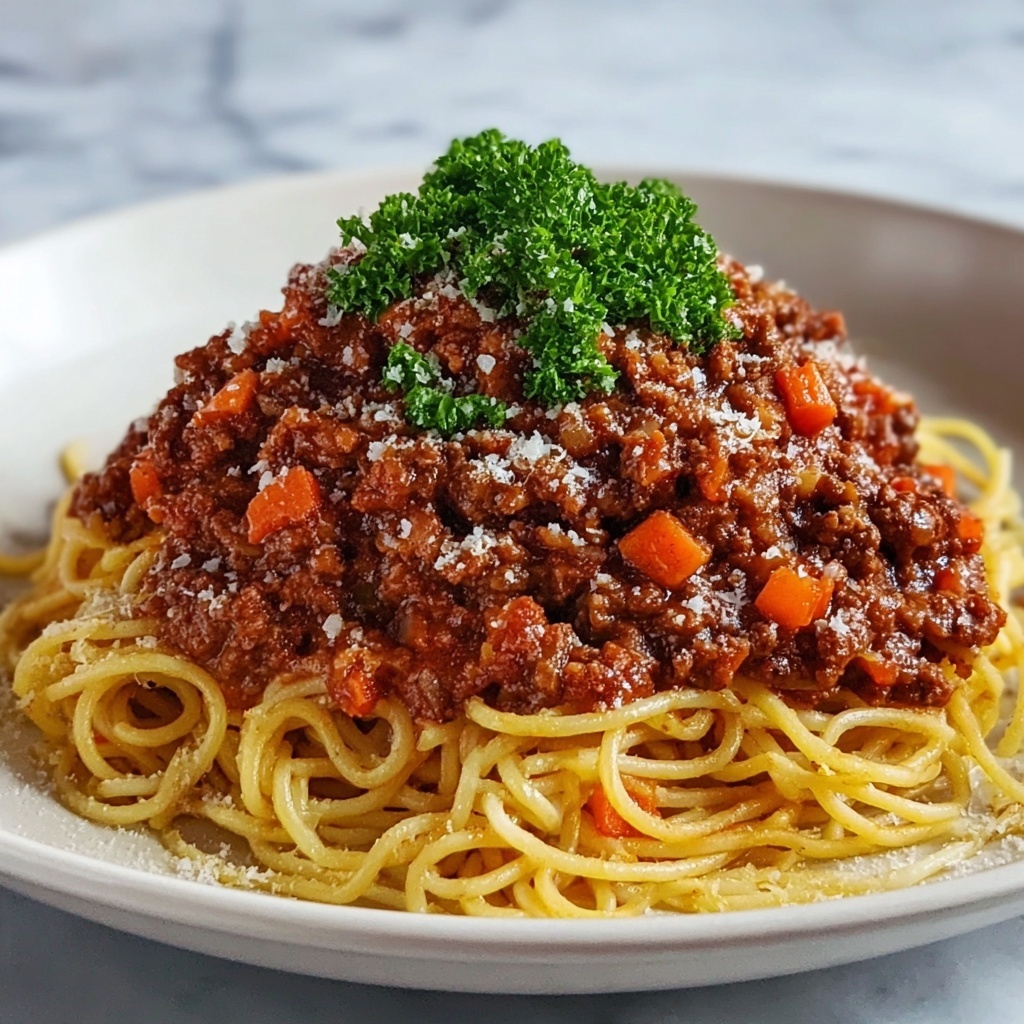
If you’re searching for that ultimate comfort dish that always hits the spot, look no further than this Classic Spaghetti Bolognese Recipe. It’s a timeless Italian favorite that combines a rich, slow-simmered meat sauce with perfectly al dente spaghetti, bringing warmth and heartiness to every bite. The layers of tender beef, savory pancetta, vibrant vegetables, and fragrant herbs meld beautifully with the tangy tomatoes and a splash of creamy milk for that melt-in-your-mouth texture. Whether it’s a weeknight dinner or a special occasion, this recipe is sure to become a beloved staple in your kitchen rotation.
Ingredients You’ll Need
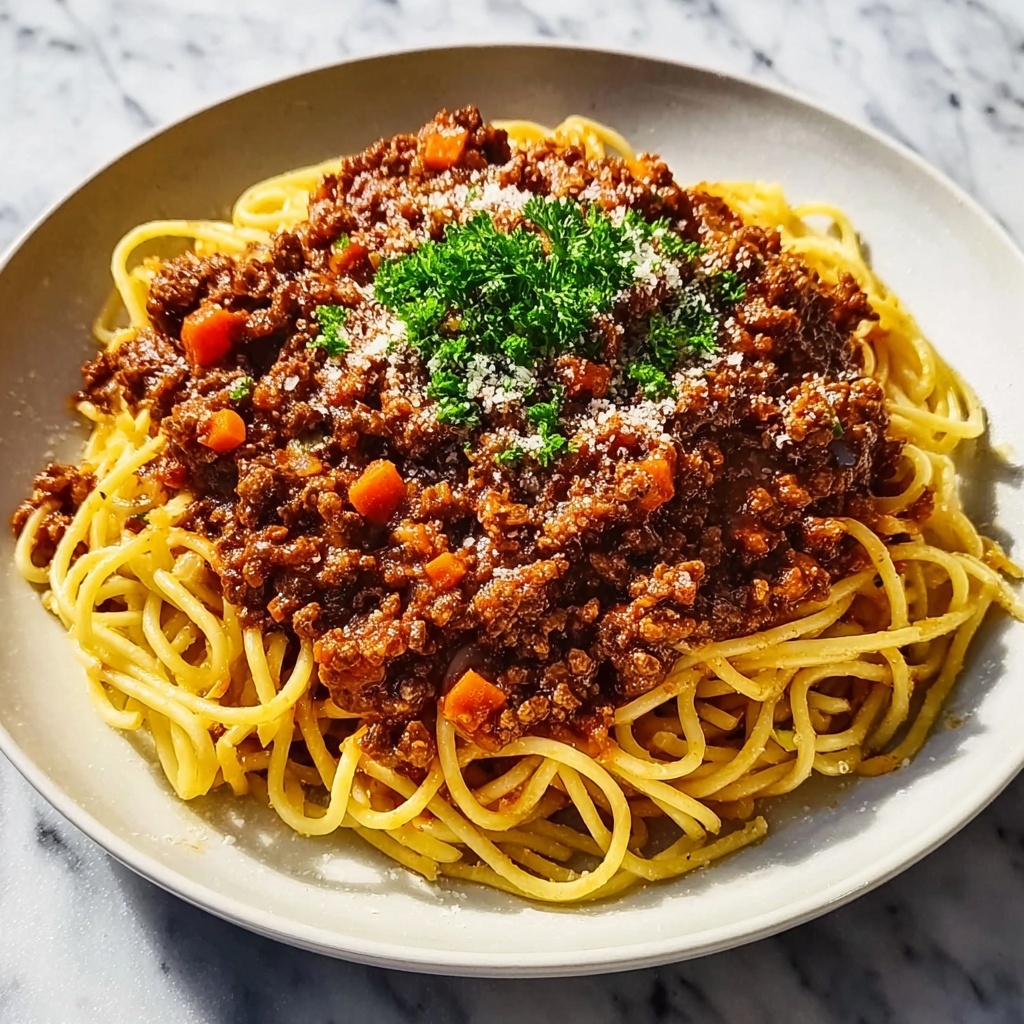
These ingredients might seem simple, but each one plays an essential role in building the delicious flavor, texture, and color that make this Classic Spaghetti Bolognese Recipe unforgettable. From the base of diced vegetables that softly caramelize to the robust blend of tomato and herbs, every component has its moment to shine.
- 400 g dried spaghetti: The star vessel that carries the sauce beautifully, best cooked al dente for the perfect bite.
- 2 tbsp olive oil: Adds a subtle fruitiness and helps cook the vegetables gently.
- 1 tbsp unsalted butter: Optional but recommended for a deeper richness in your sauce.
- 1 large yellow onion, finely diced: Provides a sweet, aromatic foundation for the sauce.
- 2 medium carrots, finely diced: Adds natural sweetness and a lovely texture contrast.
- 2 celery ribs, finely diced: Brings earthiness and a classic soffritto flavor.
- 3 cloves garlic, minced: Infuses the sauce with warmth and complexity.
- 500 g ground beef (80–90% lean): The hearty protein base, perfect for a rich, meaty sauce.
- 100 g pancetta or streaky bacon, finely chopped: Optional but traditional, introduces smoky depth.
- 120 ml dry red wine: Adds acidity and complexity, perfect for deglazing the pan.
- 800 g canned crushed tomatoes or tomato passata: The body of the sauce, providing vibrant color and tang.
- 2 tbsp tomato paste: Deepens the tomato flavor with a subtle sweetness.
- 250 ml beef stock or water: Keeps the sauce moist and adds savory notes.
- 150 ml whole milk or half-and-half: Creamifies the sauce at the end, smoothing out acidity.
- 1 bay leaf: Adds herbal nuance during the long simmer.
- 1 tsp dried oregano: Brings classic Italian aroma and taste.
- 1 tsp dried thyme or Italian seasoning: Enhances the sauce’s herbaceous footprint.
- 1/2 tsp sugar: Optional but helps balance tomato acidity perfectly.
- Salt, to taste: Essential to bring all flavors together.
- Freshly ground black pepper, to taste: Adds a subtle kick and depth.
- Pinch of red pepper flakes: Optional, for those who enjoy a gentle heat.
- Fresh basil or flat-leaf parsley, chopped: Brightens and freshens up the finished dish.
- 60–80 g freshly grated Parmesan cheese, plus extra: The perfect cheesy finish that melts into the sauce and pasta.
How to Make Classic Spaghetti Bolognese Recipe
Step 1: Prepare the Vegetables
Start by finely dicing the onion, carrots, and celery into small, uniform pieces. This combination, known as soffritto, is the heart of the sauce and when cooked slowly, it develops incredible sweetness and depth of flavor. Mince your garlic as well, and if you’re using pancetta or bacon, chop that finely too.
Step 2: Cook the Sofritto Base
Heat the olive oil and butter in a large heavy-bottomed pot over medium heat. Add your diced onion, carrot, and celery along with a small pinch of salt. Stir occasionally and cook gently for about 8 to 10 minutes until the vegetables are very soft and lightly golden, making sure they don’t brown or crisp too much. Then, toss in the minced garlic and cook for just 30 to 60 seconds until fragrant.
Step 3: Brown the Pancetta and Beef
Add the pancetta (if using) and cook for a few minutes until the fat renders and the edges brown, adding amazing smoky notes. Then increase heat to medium-high and crumble in your ground beef. Season lightly with salt and pepper. Cook the meat, stirring often, until no pink remains and it’s well browned. Allow some caramelization on the bottom of the pan—these coveted browned bits pack serious flavor!
Step 4: Deglaze with Red Wine
Pour in the dry red wine and stir well, scraping up all those tasty browned bits from the bottom of the pot. Let the wine simmer and reduce for 2 to 3 minutes, allowing some of the alcohol to evaporate, but keeping the mix juicy and flavorful.
Step 5: Add Tomatoes and Seasonings
Mix in the tomato paste and cook it for 1 to 2 minutes to bring out its natural sweetness and deepen its flavor. Then stir in the crushed tomatoes or passata, along with the beef stock or water. Add your bay leaf, dried oregano, dried thyme or Italian seasoning, sugar if using, and red pepper flakes for a hint of heat. Bring the sauce to a gentle simmer.
Step 6: Simmer Slowly for Maximum Flavor
Reduce the heat so the sauce just barely bubbles and partially cover with a lid left slightly ajar. Simmer the sauce for at least 45 to 60 minutes, stirring every 10 to 15 minutes to prevent sticking. For an even richer flavor, extend the simmer up to 2 hours, adding a splash of water or stock if the sauce thickens too much. Towards the last 15 minutes, taste and adjust the seasoning with salt and pepper.
Step 7: Finish with Milk for that Classic Creaminess
About 15 minutes before serving, stir in the milk or half-and-half. Let the sauce simmer gently and uncover, stirring occasionally, until it thickens nicely and takes on an extra velvety richness. Remove the bay leaf and taste once more to perfect the seasoning.
Step 8: Cook the Spaghetti
Bring a large pot of well-salted water to a boil and cook your spaghetti according to package instructions until al dente. Remember to reserve about one cup of the pasta cooking water before you drain.
Step 9: Combine Pasta and Sauce
Return the drained spaghetti to the pot or transfer to a serving bowl. Add two to three ladles of your luscious Bolognese sauce along with a splash of your reserved pasta water. Toss everything together over low heat or thoroughly in the bowl, so the sauce clings beautifully and gives the pasta a glossy coating.
Step 10: Serve Up Your Masterpiece
Plate the sauced spaghetti in warm bowls, spooning a little extra sauce on top of each portion. Finish generously with freshly grated Parmesan and sprinkle with chopped fresh basil or parsley. A grind of black pepper crowns this hearty, comforting dish perfectly. Serve immediately and watch your guests dive right in!
How to Serve Classic Spaghetti Bolognese Recipe
Garnishes
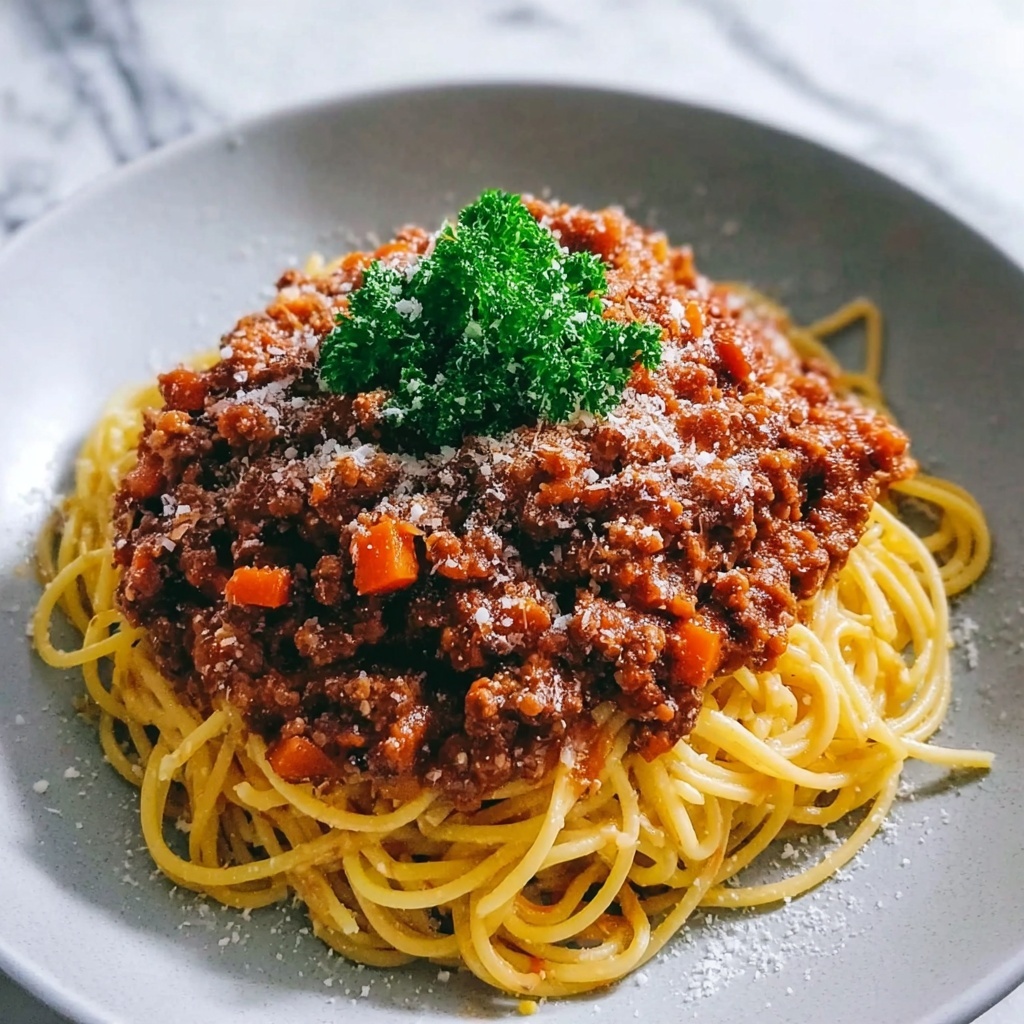
A sprinkle of freshly grated Parmesan cheese is non-negotiable for a Classic Spaghetti Bolognese Recipe; it melts into the warm sauce and adds a salty, umami punch that is simply irresistible. Fresh chopped basil or parsley not only adds vibrant color but also offers a refreshing herbal lift that brightens every bite.
Side Dishes
This dish pairs beautifully with classic Italian sides like crusty garlic bread to mop up the sauce or a simple green salad dressed with lemon vinaigrette. Roasted vegetables or steamed greens also work well to balance the richness of the Bolognese and complete your meal without overpowering the star of the show.
Creative Ways to Present
For a fun twist, serve your Classic Spaghetti Bolognese Recipe in individual pasta bowls garnished with edible flowers or microgreens for a touch of elegance. You can also layer the sauce and spaghetti in a beautiful glass baking dish, then sprinkle with cheese and bake briefly for a bubbly baked spaghetti dish that’s great for family-style dining.
Make Ahead and Storage
Storing Leftovers
If you have any leftovers, store your Bolognese sauce in an airtight container in the fridge for up to 3 days. The flavors often develop even more after resting, making reheated servings just as delicious.
Freezing
Classic Spaghetti Bolognese Recipe freezes wonderfully. Cool the sauce completely before transferring it to freezer-safe containers or bags. It can be frozen for up to 3 months. For best texture, freeze the sauce separately from the pasta.
Reheating
When reheating, gently warm the sauce on the stove over low heat, stirring occasionally, adding a splash of water or milk to loosen it if needed. If mixing with pasta, toss everything together just until heated through — avoiding overcooking the pasta to keep it perfect.
FAQs
Can I use ground turkey or chicken instead of beef in this Classic Spaghetti Bolognese Recipe?
Absolutely! Ground turkey or chicken can be a leaner alternative. Just keep in mind the flavor will be lighter, so consider adding a bit more herbs or pancetta for depth.
Why is slow simmering important in this recipe?
Slow simmering allows all the ingredients to meld together, breaking down the meat and vegetables to create an intensely flavorful and tender sauce. It also enriches the texture and balances acidity.
Is the milk really necessary in the sauce?
Yes, stirring in milk toward the end helps mellow the acidity of the tomatoes and adds a silky richness that’s signature to a true Classic Spaghetti Bolognese Recipe.
Can I make this recipe in a slow cooker?
You can! Brown the vegetables and meat on the stove first, then transfer everything to a slow cooker to simmer on low for 4 to 6 hours. Add the milk in the last 30 minutes of cooking.
What’s the best type of pasta for Bolognese?
Traditional spaghetti is a classic choice, but wider pastas like tagliatelle or pappardelle also hold the thick sauce beautifully, giving a delightful bite with every forkful.
Final Thoughts
This Classic Spaghetti Bolognese Recipe is a heartwarming celebration of simple ingredients transformed by care and patience into a meal that feels like a warm hug. I can’t recommend it enough for your next cozy dinner — it’s the type of dish that brings smiles to the table and memories to the heart. So grab your apron, stir that pot, and share this timeless Italian classic with the ones you love!
Print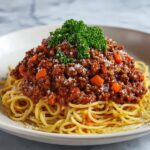
Classic Spaghetti Bolognese Recipe
- Prep Time: 0h 15m
- Cook Time: 2h 0m
- Total Time: 2h 15m
- Yield: 4 to 6 servings
- Category: Main Course
- Method: Stovetop
- Cuisine: Italian
Description
Classic Spaghetti Bolognese is a rich and hearty Italian meat sauce made with ground beef, vegetables, tomatoes, and a splash of wine, slow-simmered to develop deep flavors. This recipe combines traditional ingredients like pancetta, garlic, and herbs with a finishing touch of milk to create a silky, savory sauce served over perfectly al dente spaghetti and topped with freshly grated Parmesan cheese.
Ingredients
Pasta
- 400 g dried spaghetti
Sauce
- 2 tbsp olive oil
- 1 tbsp unsalted butter (optional, for richness)
- 1 large yellow onion, finely diced
- 2 medium carrots, finely diced
- 2 celery ribs, finely diced
- 3 cloves garlic, minced
- 500 g round beef (80–90% lean)
- 100 g pancetta or streaky bacon, finely chopped (optional but traditional)
- 120 ml (1/2 cup) dry red wine
- 800 g canned crushed tomatoes or tomato passata
- 2 tbsp tomato paste
- 250 ml (1 cup) beef stock or water
- 150 ml (2/3 cup) whole milk or half-and-half
- 1 bay leaf
- 1 tsp dried oregano
- 1 tsp dried thyme or Italian seasoning
- 1/2 tsp sugar (optional, to balance acidity)
- Salt, to taste
- Freshly ground black pepper, to taste
- Pinch of red pepper flakes (optional, for gentle heat)
- Fresh basil or flat-leaf parsley, chopped, for serving
- 60–80 g freshly grated Parmesan cheese, plus extra for serving
Instructions
- Prepare the vegetables: Finely dice the onion, carrots, and celery into small, even pieces so they soften evenly and blend into the sauce. Mince the garlic and finely chop the pancetta or bacon if using.
- Start the base (soffritto): Heat the olive oil and butter in a large, heavy-bottomed pot or deep skillet over medium heat. Add the onion, carrot, and celery with a small pinch of salt. Cook, stirring occasionally, for 8–10 minutes until the vegetables are very soft and lightly golden but not browned or crisp. Lower the heat if they start to darken too quickly. Add the minced garlic and cook for 30–60 seconds until fragrant.
- Cook the pancetta and beef: Add the chopped pancetta or bacon to the pot (if using) and cook for 3–4 minutes until the fat renders and the edges start to brown. Increase heat to medium-high. Add the ground beef, breaking it up with a wooden spoon into small pieces. Season lightly with salt and pepper. Cook for 6–8 minutes, stirring and breaking up any clumps, until the meat is no longer pink and has started to brown. Allow some bits to caramelize on the bottom of the pan for extra flavor.
- Deglaze with wine: Pour in the red wine. Stir well, scraping up any browned bits from the bottom of the pot. Let the wine simmer and reduce for 2–3 minutes, until it has mostly evaporated but the mixture is still moist.
- Add tomatoes and seasonings: Stir in the tomato paste and cook for 1–2 minutes to caramelize it slightly. Add the crushed tomatoes or passata and the beef stock (or water). Add the bay leaf, dried oregano, dried thyme or Italian seasoning, sugar (if using), and a small pinch of red pepper flakes if desired. Stir to combine, then bring the sauce to a gentle simmer.
- Long, slow simmer: Reduce the heat to low so the sauce is just barely bubbling. Partially cover the pot with a lid, leaving it slightly ajar. Simmer for at least 45–60 minutes, stirring every 10–15 minutes to prevent sticking. For deeper flavor, continue simmering up to 1.5–2 hours, adding a splash of water or stock if it becomes too thick. Taste and adjust seasoning with salt and pepper during the last 15 minutes of cooking.
- Finish with milk: About 15 minutes before serving, stir in the milk or half-and-half. Simmer gently, uncovered, stirring occasionally, until the sauce thickens again and becomes silky and rich. Remove the bay leaf and discard. Check seasoning one final time and adjust salt and pepper as needed.
- Cook the spaghetti: Bring a large pot of well-salted water (it should taste pleasantly salty) to a rolling boil. Add the spaghetti and cook according to package instructions until al dente. Reserve about 1 cup (240 ml) of the starchy pasta cooking water, then drain the spaghetti.
- Combine pasta and sauce: Return the drained spaghetti to the pot or place it in a large serving bowl. Add a generous amount of Bolognese sauce (start with about 2–3 ladles, adding more as needed) and a splash of reserved pasta water. Toss over low heat (if using the pot) or thoroughly in the bowl until the spaghetti is evenly coated and glossy. The pasta water will help the sauce cling.
- Serve: Plate the sauced spaghetti in warm bowls. Spoon a little extra Bolognese on top of each portion. Sprinkle generously with freshly grated Parmesan cheese. Garnish with chopped fresh basil or parsley and a grind of black pepper. Serve immediately with extra Parmesan on the side.
Notes
- Using pancetta or streaky bacon adds traditional depth, but can be omitted for a leaner sauce.
- Simmering time can be extended up to 2 hours for a richer, more concentrated flavor.
- The addition of milk at the end mellows acidity and enriches the sauce.
- Reserve pasta water to help the sauce cling to the spaghetti for a silky finish.
- Adjust seasoning with salt, pepper, and optional sugar according to taste preferences.
- Serve with extra grated Parmesan cheese for added flavor.