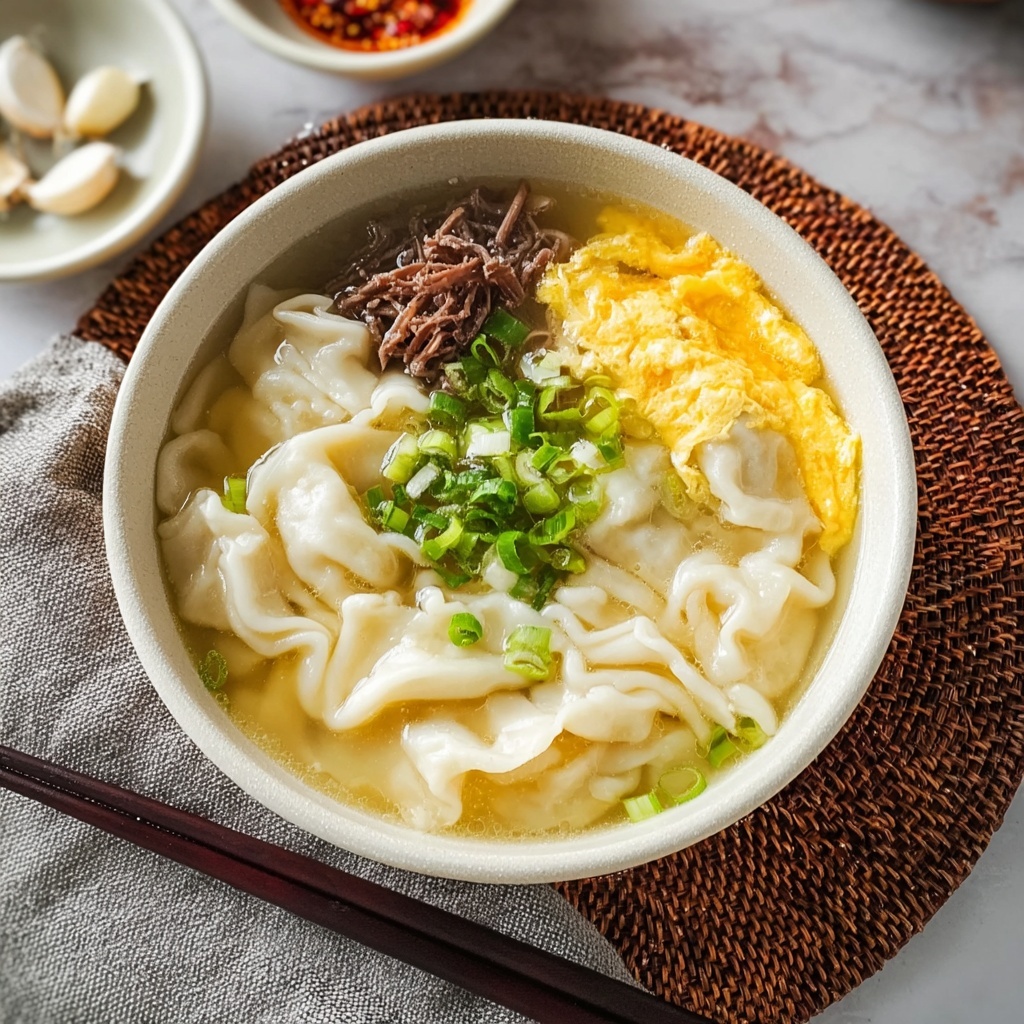
Nothing quite warms the soul like a hearty bowl of Warm Korean Rice Cake and Dumpling Soup (Tteokguk with Mandu) Recipe. This traditional Korean dish offers a beautiful harmony of textures and flavors — from the tender, savory beef broth to the chewy rice cakes and flavorful dumplings. Each spoonful brings comfort and celebration all in one bowl, making it perfect for chilly days or whenever you crave a heartwarming meal that feels like a loving kitchen hug.
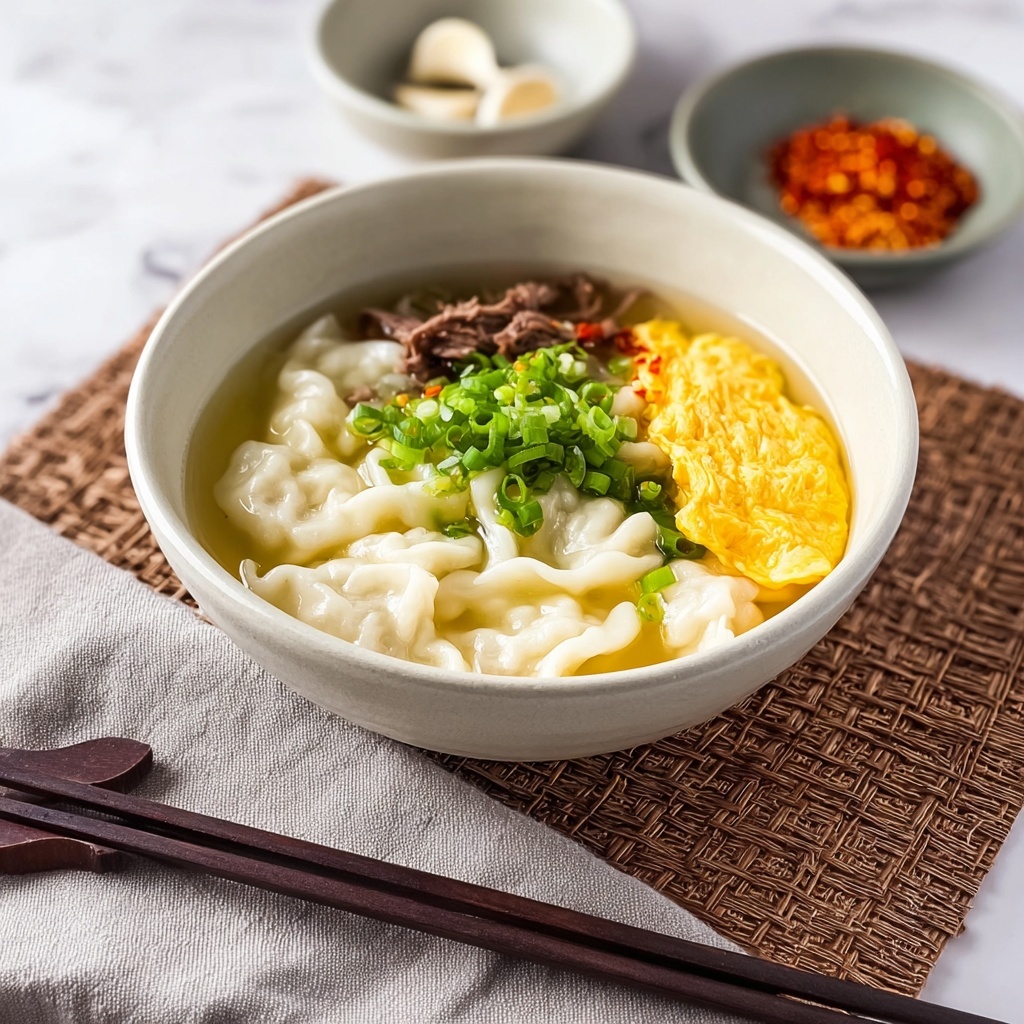
Ingredients You’ll Need
The beauty of this Warm Korean Rice Cake and Dumpling Soup (Tteokguk with Mandu) Recipe lies in its simple yet essential ingredients, each contributing to the rich taste, inviting texture, and vibrant look of the soup. From the robust beef brisket that forms the broth to the chewy rice cakes and delicate dumplings, every component has its place.
- Water (12 cups): The base of the broth, important for extracting all the savory goodness.
- Beef brisket (8 ounces, cubed): Provides a deep, meaty flavor and tender texture after long simmering.
- Garlic cloves (6 whole): Infuse the broth with aromatic warmth.
- Green onions (4 stalks, white/light green parts): Bring freshness and a subtle sweet onion flavor to the broth.
- Korean soup soy sauce (Guk-Ganjang, 3 tablespoons): Adds a savory depth that defines Korean soups.
- Salt and freshly ground black pepper (to taste): Essential seasonings to balance flavors.
- Sliced rice cakes (tteok, 21 ounces): The chewy star ingredient that makes this soup stand out.
- Gim sheets (2 sheets): Lightly toasted for a crunchy, umami-rich topping.
- Eggs (4 large, separated): Used to make delicate ribbons that add color and silkiness.
- Vegetable oil (to grease pan): Helps create thin egg layers for ribbons.
- Minced garlic (1 clove): Combined with shredded beef for added flavor.
- Sesame oil (1 teaspoon): Adds a warm, nutty aroma to the beef garnish.
- Black pepper (1/4 teaspoon, for egg mixture): Light seasoning for the egg ribbons.
- Korean dumplings (Mandu, 1 pound): Filled with savory goodness, these dumplings enhance the comforting aspect of the soup.
- Green onion tops (reserved green parts): Bright and fresh garnish for presentation.
How to Make Warm Korean Rice Cake and Dumpling Soup (Tteokguk with Mandu) Recipe
Step 1: Preparing the Broth
Begin by rinsing the beef brisket cubes under cold water to remove any impurities, which helps keep the broth clear and clean-tasting. Next, combine water, the beef cubes, whole garlic cloves, and the white parts of the green onions in a large pot. Bring this mixture to a vigorous boil, then lower the heat to a gentle simmer. Let it cook slowly for about 1 to 2 hours until the brisket turns tender and infuses the broth with deep, rich flavors that form the heart of your soup.
Step 2: Getting the Rice Cakes Ready
While the broth is simmering away, soak your sliced rice cakes in cold water for 20 to 30 minutes. This softens them slightly and ensures they cook evenly, resulting in that signature chewy texture that makes tteokguk so beloved. Don’t skip this step, as perfectly prepared rice cakes are essential for balancing the mouthfeel of the soup.
Step 3: Toasting the Gim Sheets
Take your gim (roasted seaweed) sheets and toast them lightly in a dry skillet over medium heat. This step unlocks their natural nutty aroma and crisp texture, creating a delightful topping that adds a satisfying crunch and umami burst to each bowl.
Step 4: Crafting the Egg Ribbons
Separate the eggs into yolks and whites—we will use both in turns to create those delicate ribbons that float beautifully in the soup. Grease a pan lightly with vegetable oil and beat the yolks. Pour a thin layer of yolk into the hot pan, cook quickly, and then slice it into thin strips. Later, when the broth is ready, add the beaten egg whites by slowly pouring them in while stirring to create tender, cloud-like egg ribbons.
Step 5: Seasoning the Broth and Preparing the Beef Garnish
Once your broth has finished simmering, strain it to remove the beef, garlic, and vegetable solids. Return the clear broth to the pot and season it with Korean soup soy sauce, salt, and freshly ground black pepper to your liking. Meanwhile, shred the tender brisket and toss it with minced garlic, a splash of sesame oil, and a pinch of black pepper to create a fragrant and flavorful topping.
Step 6: Cooking Rice Cakes and Dumplings
Bring the seasoned broth back to a boil. Add the soaked rice cakes and the Korean dumplings (mandu) gently into the pot. Allow them to cook together for about 5 to 7 minutes. The rice cakes will become perfectly chewy and the dumplings tender, absorbing the rich flavors of the broth and creating an irresistibly comforting combination.
Step 7: Final Assembly
With the rice cakes and dumplings cooked, add your prepared egg whites gradually, stirring continuously so that delicate egg ribbons form seamlessly throughout the soup. Serve the soup piping hot, topping each bowl generously with shredded beef, egg yolk strips, and crumbled toasted gim. Sprinkle with the reserved green onion tops for a fresh, vibrant finish that looks as good as it tastes.
How to Serve Warm Korean Rice Cake and Dumpling Soup (Tteokguk with Mandu) Recipe
Garnishes
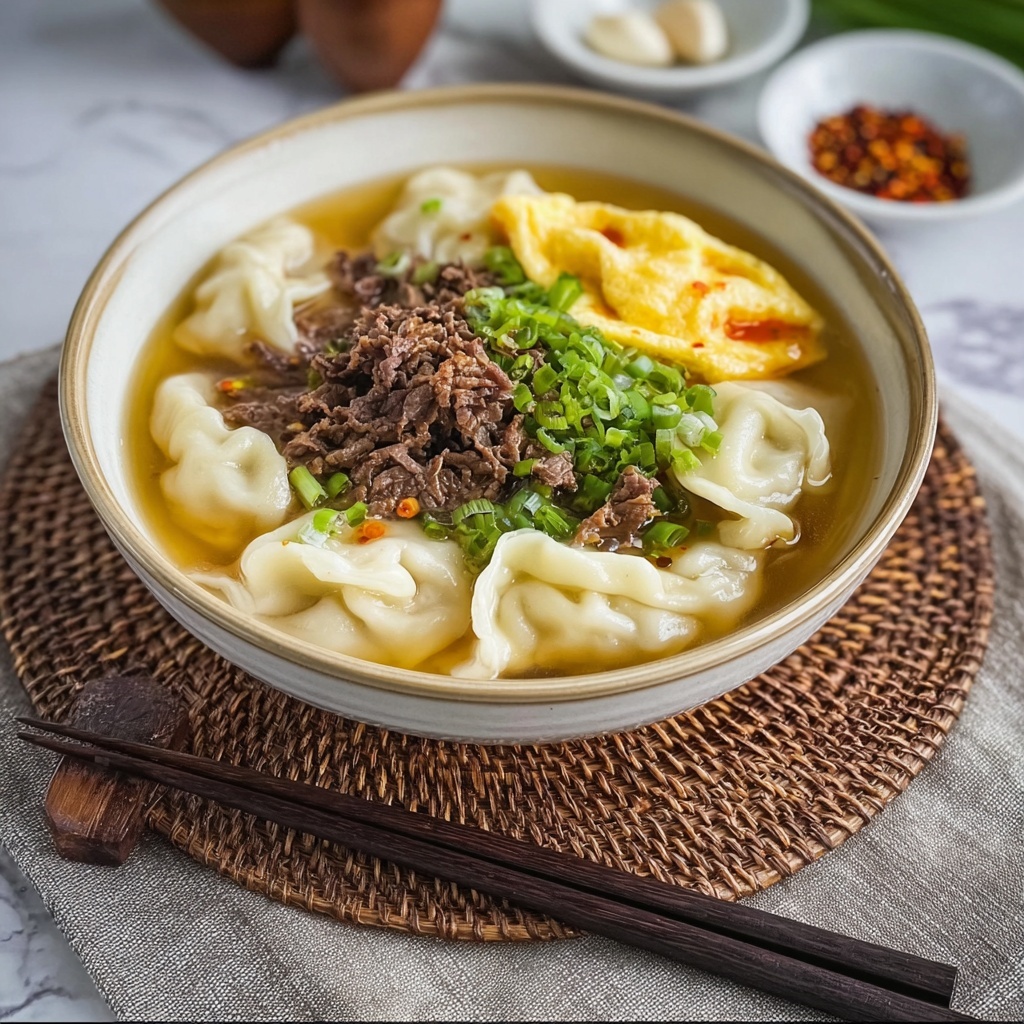
Garnishing this Warm Korean Rice Cake and Dumpling Soup (Tteokguk with Mandu) Recipe is where you can express your love and style. The shredded beef tossed in garlic and sesame oil adds a fragrant heartiness, while the crumbled toasted seaweed provides a crispy, umami-packed texture. Fresh green onion tops bring a pop of color and a bright bite that lifts the entire dish. These garnishes not only enhance flavor but make each bowl inviting and visually stunning — perfect for sharing with guests or family.
Side Dishes
This soup shines as the centerpiece of any meal, but pairing it with some traditional Korean side dishes elevates the experience. Consider serving crisp kimchi for an unexpected tangy crunch or a simple spinach namul seasoned with sesame oil and garlic to complement the rich broth. These sides round out the meal and introduce contrasting textures and flavors that make dining memorable.
Creative Ways to Present
Want to impress your friends or create an Instagram-worthy meal? Serve your Warm Korean Rice Cake and Dumpling Soup (Tteokguk with Mandu) Recipe in individual stone bowls to keep it hot longer. You might also garnish with thinly sliced chili peppers for a vibrant splash of red and mild heat or a sprinkling of toasted sesame seeds for subtle crunch and scent. These small touches make the soup feel special and celebratory every single time.
Make Ahead and Storage
Storing Leftovers
If you find yourself lucky enough to have leftovers of this Warm Korean Rice Cake and Dumpling Soup (Tteokguk with Mandu) Recipe, store them in an airtight container in the refrigerator. Because the rice cakes continue to soak up broth, it’s best enjoyed within 1 to 2 days to maintain optimal texture and flavor.
Freezing
Freezing this soup is possible if you separate the dumplings and rice cakes from the broth first. Freeze the broth and cooked components in separate containers. When thawing, reheat the broth gently and add the rice cakes and dumplings to avoid them becoming too mushy. This method helps preserve the essence of the soup for longer enjoyment.
Reheating
Reheat leftovers on the stovetop over medium heat to keep the flavors fresh and even. If the soup thickens due to rice cakes absorbing liquid, add a splash of water or broth to loosen it up. Stir gently while warming and reintroduce garnishes as needed to refresh the texture and appearance.
FAQs
Can I use chicken or pork instead of beef for this soup?
Absolutely! While traditional recipes often use beef brisket for its rich flavor, chicken or pork can be substituted to create a different but still delicious broth. Adjust cooking times accordingly to ensure the meat becomes tender and flavorful.
Where can I find Korean rice cakes and mandu?
Korean rice cakes and mandu are commonly found at Asian grocery stores or online retailers specializing in Korean ingredients. Look for fresh or frozen sections, and make sure to soak and prepare the rice cakes as instructed for the best texture.
Can I make this soup vegetarian?
To make a vegetarian version, skip the beef and use vegetable broth as your base. Replace mandu with vegetable-filled dumplings and add mushrooms or tofu for more substance. Season well with soy sauce and garlic to keep that umami-rich experience.
How long does it take to cook the broth to get tender beef?
Simmering the broth for 1 to 2 hours is ideal to break down the beef brisket and extract maximum flavor. Rushing this step can result in tougher meat and less flavorful broth, so patience really pays off here.
What is the significance of eating Tteokguk in Korean culture?
Eating Tteokguk is traditionally associated with Korean New Year, symbolizing growth, good luck, and the gaining of a year’s worth of wisdom. Sharing this Warm Korean Rice Cake and Dumpling Soup (Tteokguk with Mandu) Recipe is a beautiful way to celebrate fresh starts and cherished traditions.
Final Thoughts
There is something truly special about making and sharing this Warm Korean Rice Cake and Dumpling Soup (Tteokguk with Mandu) Recipe. It’s a dish that brings together comfort, tradition, and delicious textures in every bite. Whether you’re new to Korean cuisine or a longtime fan, take the time to enjoy crafting this dish — your kitchen and your heart will thank you for it!
Print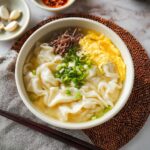
Warm Korean Rice Cake and Dumpling Soup (Tteokguk with Mandu) Recipe
- Prep Time: 45 minutes
- Cook Time: 1 hour 30 minutes
- Total Time: 2 hours 15 minutes
- Yield: 6 servings
- Category: Soup
- Method: Stovetop
- Cuisine: Korean
Description
This comforting Korean Rice Cake and Dumpling Soup combines tender beef broth, chewy rice cakes, and flavorful dumplings to create a hearty, warming dish perfect for chilly days. Enhanced with delicate egg ribbons, roasted seaweed, and fresh green onions, this soup offers a balanced blend of savory, umami, and lightly spiced flavors that makes every spoonful delightful.
Ingredients
Broth Base
- 12 cups water
- 8 ounces beef brisket, cut into cubes
- 6 whole cloves garlic
- 4 stalks green onions (white and light green parts)
- 3 tablespoons Korean soup soy sauce (Guk-Ganjang)
- Salt, to taste
- Freshly ground black pepper, to taste
Soup Components
- 21 ounces sliced rice cakes (tteok, duk)
- 1 pound Korean dumplings (Mandu)
Toppings and Garnishes
- 2 sheets gim (roasted seaweed)
- 4 large eggs (separated into yolks and whites)
- Vegetable oil, as needed for greasing pan
- 1 clove minced garlic
- 1 teaspoon sesame oil
- 1/4 teaspoon black pepper
- Reserved green onion tops (green parts)
Instructions
- Rinse Beef: Rinse the beef brisket cubes under cold water and drain well to remove any impurities before cooking.
- Simmer Broth: In a large pot, combine 12 cups of water, beef cubes, whole garlic cloves, and the white/light green parts of green onions. Bring to a boil, reduce heat to a simmer, and let cook for about 1 to 2 hours until the brisket is tender and the broth is flavorful.
- Soak Rice Cakes: While the broth simmers, soak the sliced rice cakes in cold water for 20 to 30 minutes to soften them and improve their texture in the soup.
- Toast Seaweed: Lightly toast the gim sheets in a dry skillet over medium heat until crisp and fragrant, then set aside to cool.
- Prepare Egg Layers: Separate the eggs into yolks and whites. Grease the skillet lightly with vegetable oil, beat the egg yolks, and pour them into the heated pan to create thin egg layers. Cook thoroughly, then slice into thin strips to use as garnish.
- Strain and Season Broth: Strain the broth to remove solids, return it to the pot, and season with Korean soup soy sauce, salt, and freshly ground black pepper to taste. Shred the cooked beef brisket and toss it with minced garlic, sesame oil, and black pepper for added flavor.
- Cook Rice Cakes and Dumplings: Add the soaked rice cakes and Korean dumplings to the boiling broth. Cook for 5 to 7 minutes until the rice cakes are tender and the dumplings are heated through.
- Create Egg Ribbons: Slowly pour the beaten egg whites into the simmering soup while stirring gently to form delicate egg ribbons throughout the broth.
- Assemble and Serve: Ladle the soup into bowls, topping each with shredded beef, egg yolk strips, crumbled toasted seaweed, and the reserved green onion tops for color and freshness. Serve immediately while hot.
Notes
- Soaking rice cakes beforehand prevents them from sticking together and ensures a chewy texture.
- Using brisket provides a rich, beefy flavor, but you may substitute with another cut suited for slow simmering if desired.
- Lightly toasting seaweed intensifies its flavor and adds a pleasant crunch as topping.
- The two-step egg preparation (yolk layers and white ribbons) adds texture and visual appeal to the soup.
- Adjust seasoning in the broth gradually to balance saltiness and umami from soy sauce.
- For a spicier version, add Korean chili flakes (gochugaru) or chili paste (gochujang) to the broth during seasoning.